By Olga Nayda, Business Development Lead, Avare BioTech
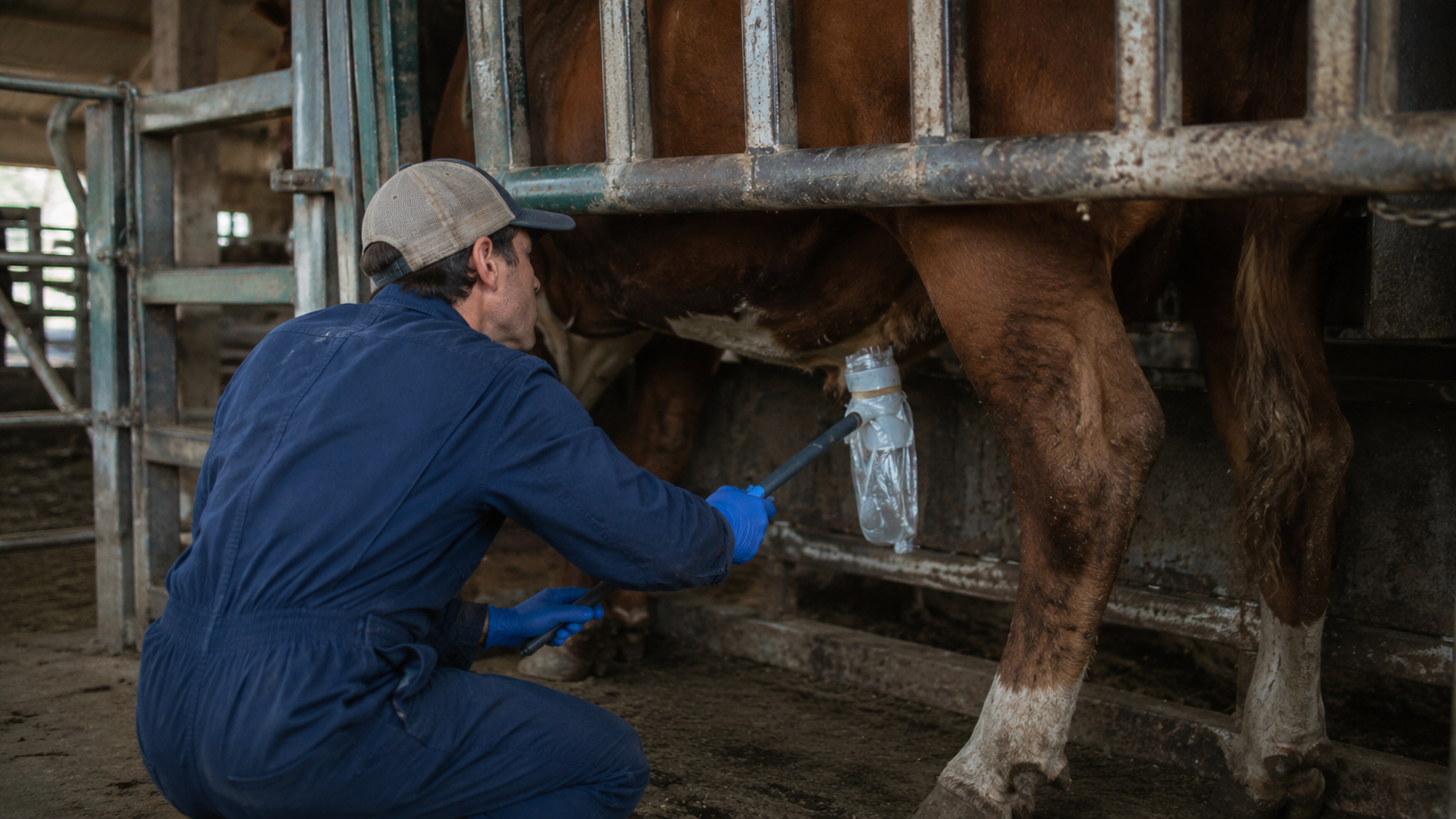
Most bovine semen never gets checked twice. The central certifies the dose, freezes it, and ships it. From that moment until it goes into the cow, nobody looks at it again. The technician trusts the label, loads the gun, and hopes.
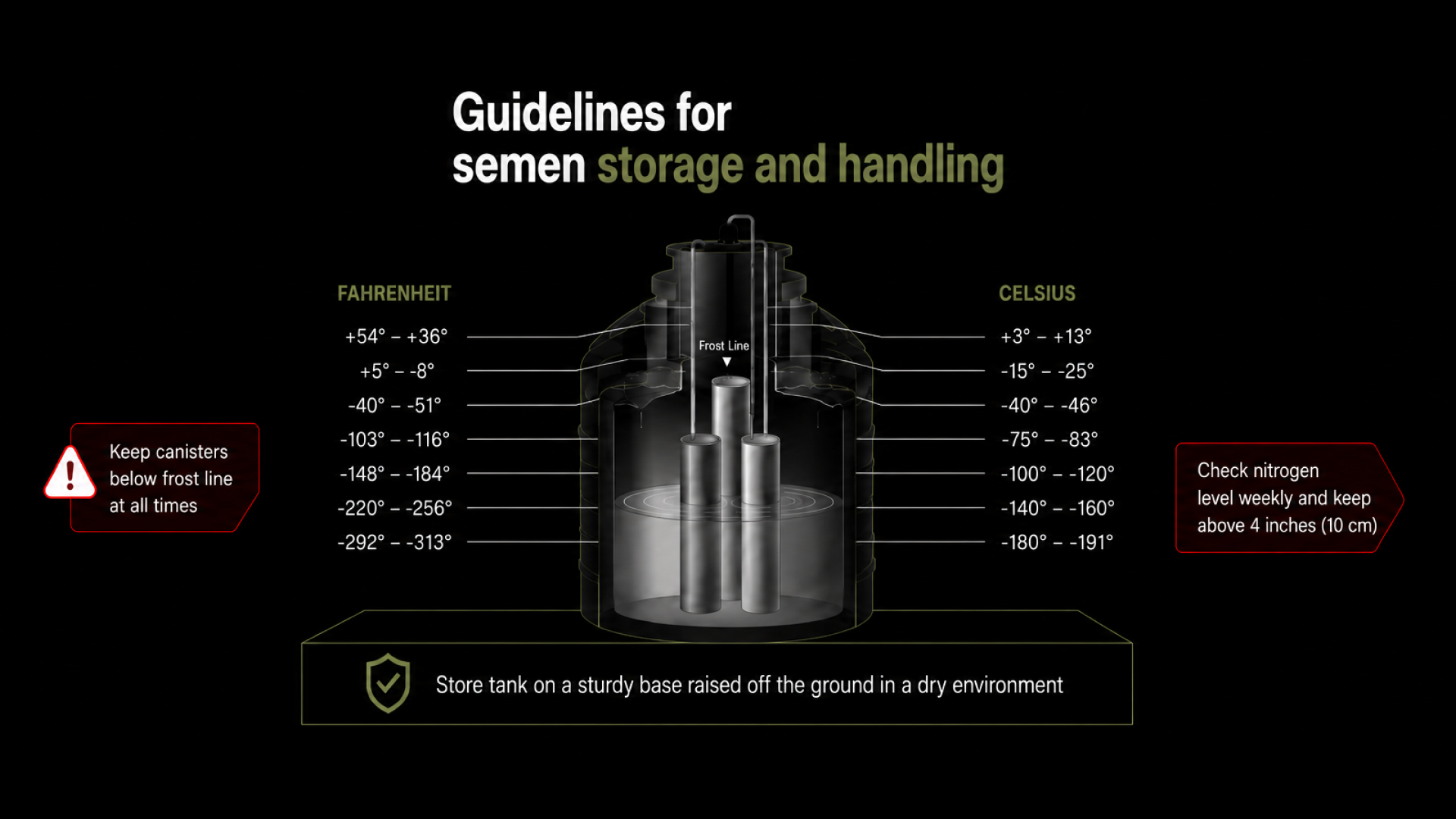
That gap is where conception rates leak. A dose that was excellent at freezing can lose motility in transport, in a botijao that ran warm, or in a thaw done wrong. You cannot fix what you do not measure, and in the field, measurement usually stops.
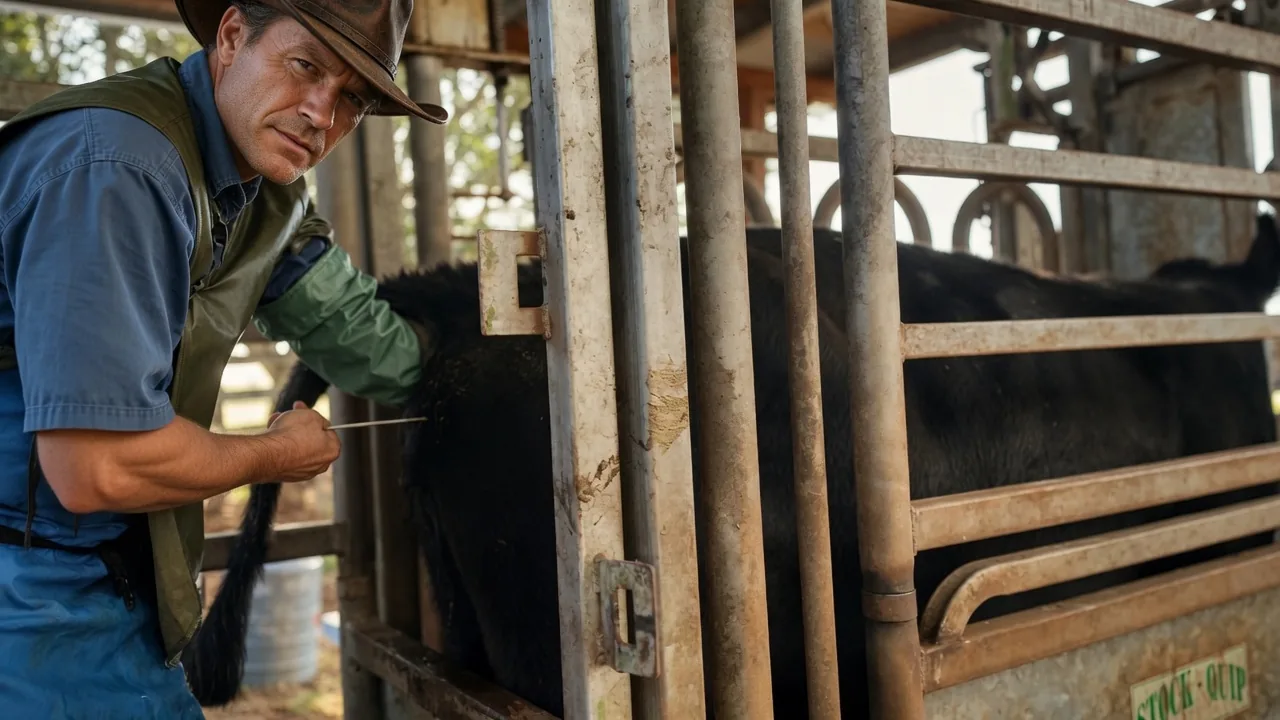
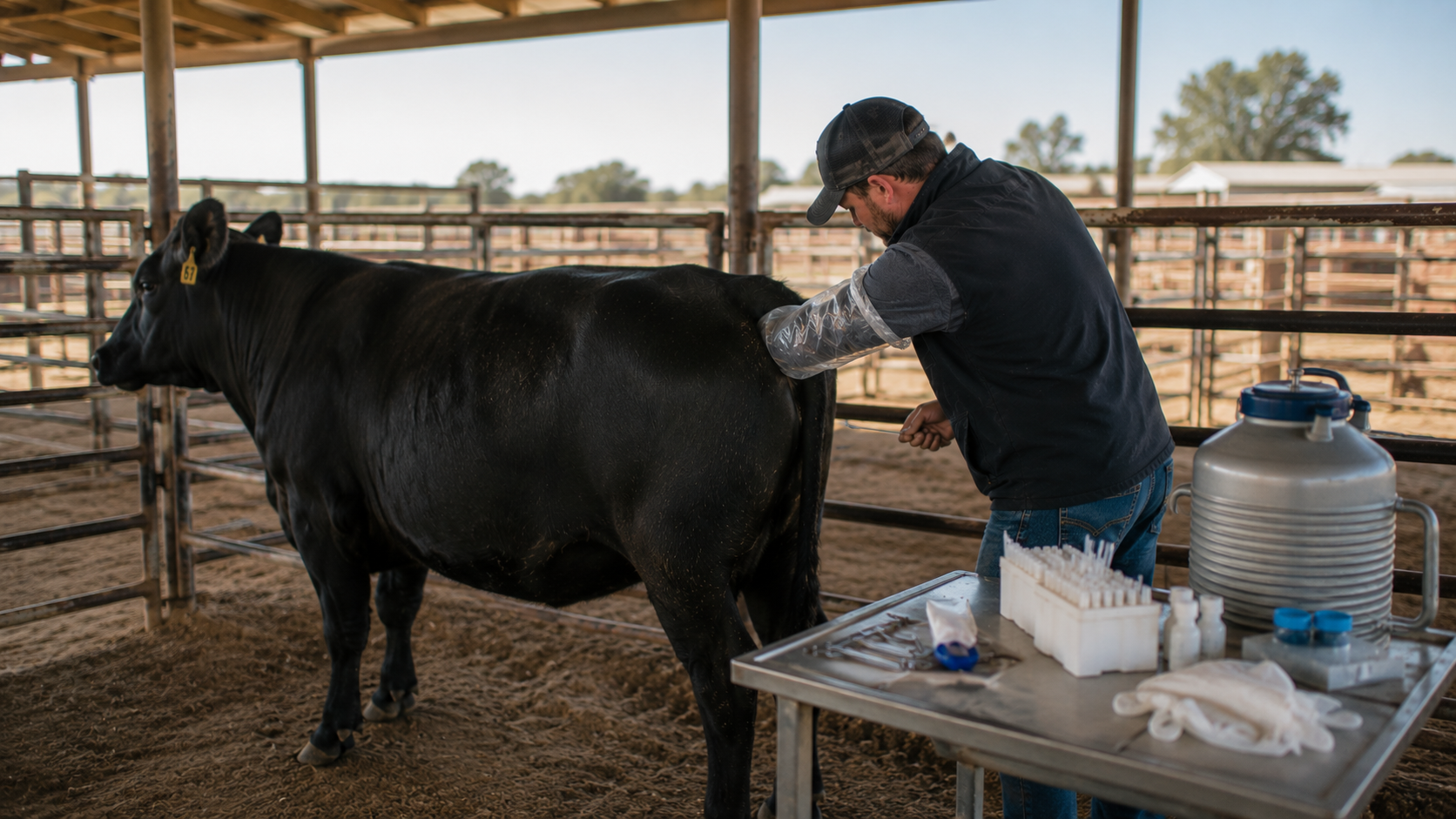
This is a step-by-step protocol for evaluating bovine semen where it actually matters: on the farm, minutes before insemination. It is built for the field technician and the autonomo vet, not the central lab. Follow it and you turn a guess into a number.
[cover]
Why field evaluation matters
Between the central and the cow, semen quality can only go down, never up. Cold shock, warm storage, a bad thaw, and long delays before deposit all cost motility. None of them leave a mark you can see with the naked eye.
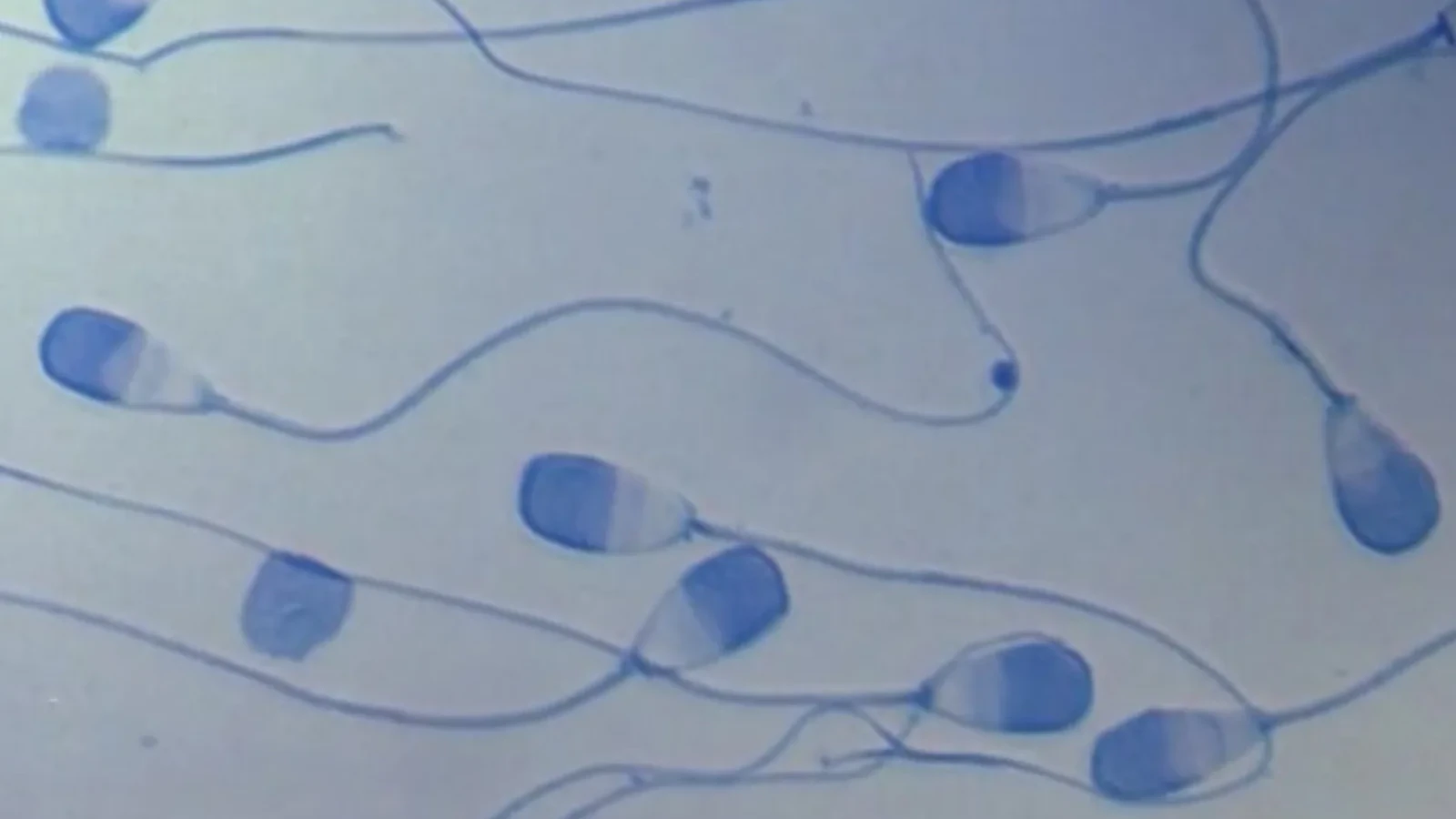
Progressive motility is the parameter that matters most here. It is the share of sperm swimming forward in a straight line, and it predicts fertilization. The accepted field threshold for an acceptable breeder is above 30 percent individual progressive motility, the standard used by the Society for Theriogenology. Below that, you are inseminating with a dose that is unlikely to settle the cow, and you will not know until pregnancy check unless you look.
The whole point of a field protocol is to catch that before the straw goes into the cow, not after the season is lost.
The Field Semen Evaluation Protocol
Three stages. Pre-check, visual assessment, then a MAKSA reading for an objective number. Work through them in order every time.
Stage 1: Pre-check (equipment and temperature)
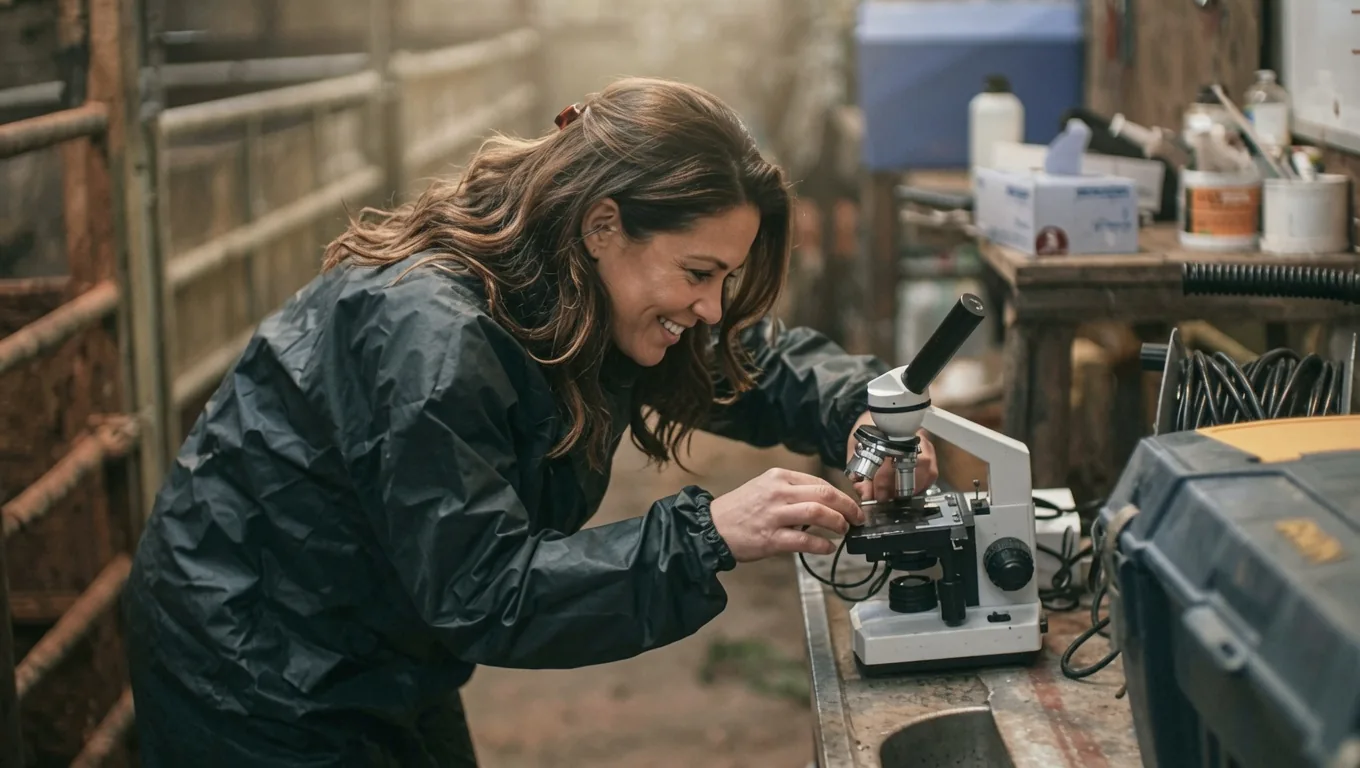
Temperature is the silent killer of a good reading. Sperm suffer cold shock the moment they touch a cold slide, and a cold microscope stage will make a good dose look bad. Get this stage right and the rest of the protocol is honest.
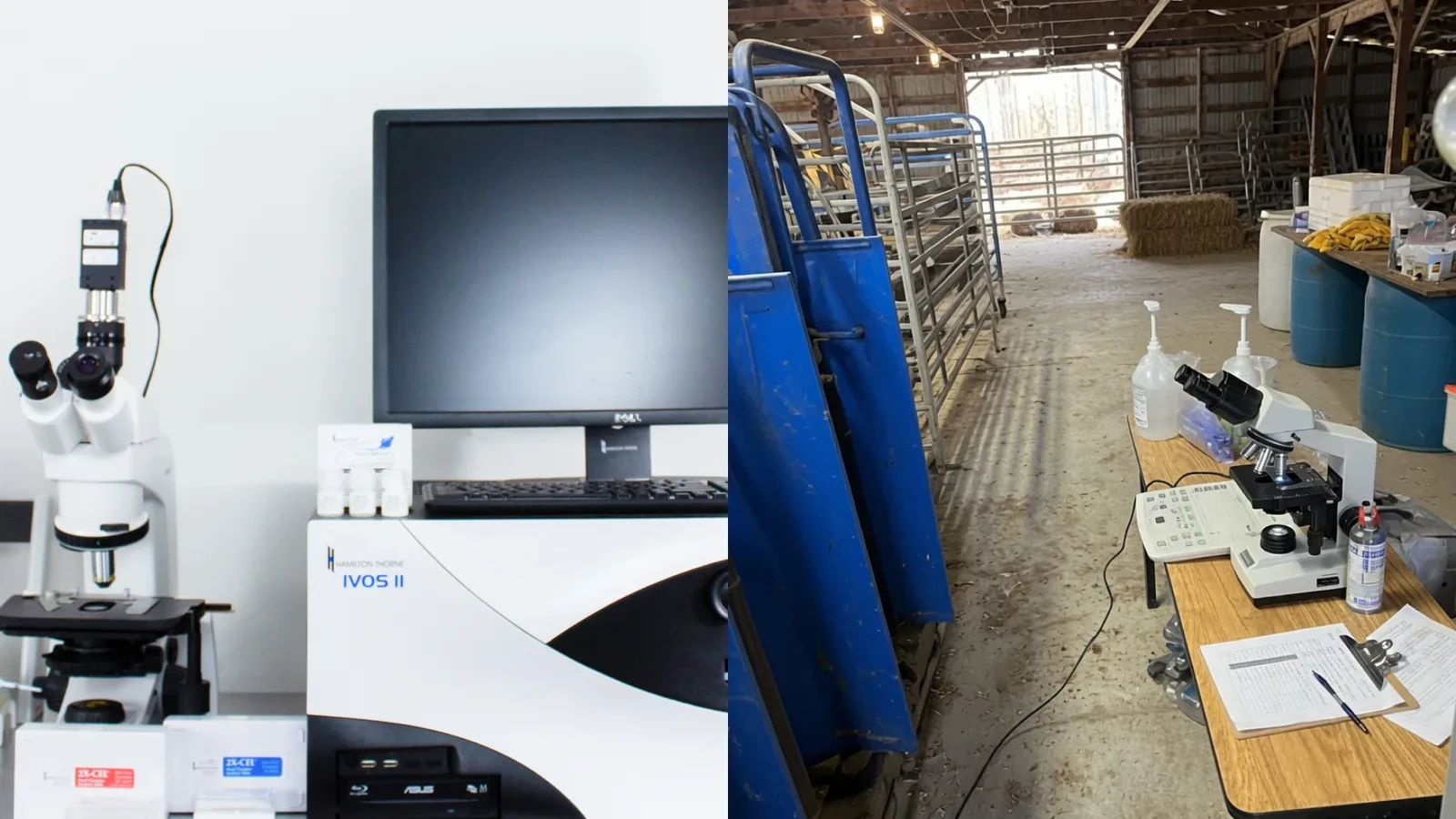
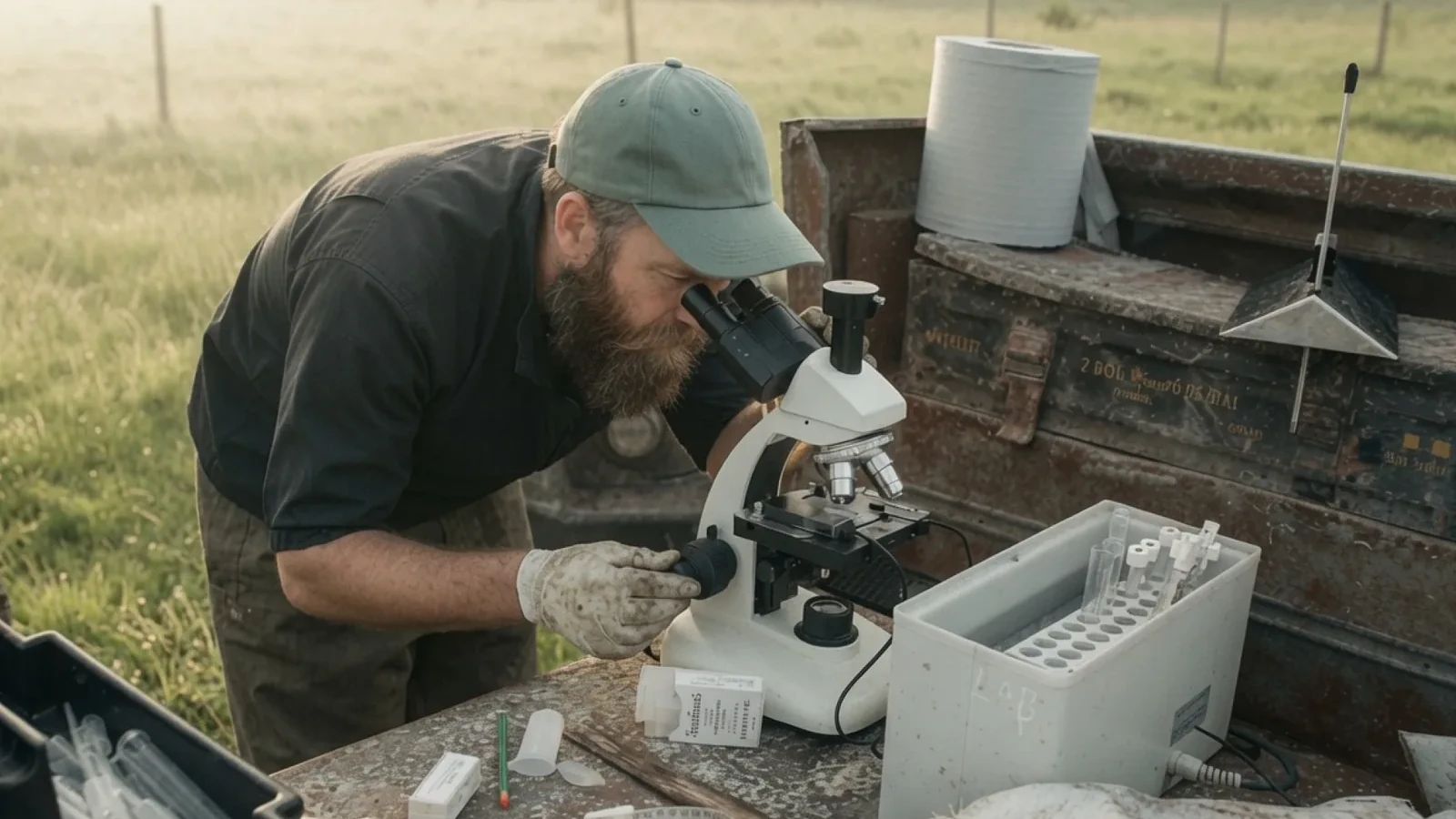
- Microscope ready, phase contrast if you have it, with a warming stage set to 37 degrees Celsius. A conventional light microscope with 10x and 40x objectives works if that is what you have.
- Every surface that touches semen held at 37 to 39 degrees. Slides, coverslips, pipettes. A cold slide alone can ruin the reading.
- Thaw water bath at 37 degrees, checked with a thermometer, not by feel. The optimal thaw is 37 degrees for 30 seconds.
- Clean, dry materials. Water and disinfectant residue are spermicidal. Anything wet or contaminated kills sperm on contact.
- Plan to read within 30 minutes of thawing. Quality falls with time. Progressive motility can drop from around 43 percent at 30 minutes to around 32 percent at 2 hours.
Stage 2: Visual assessment
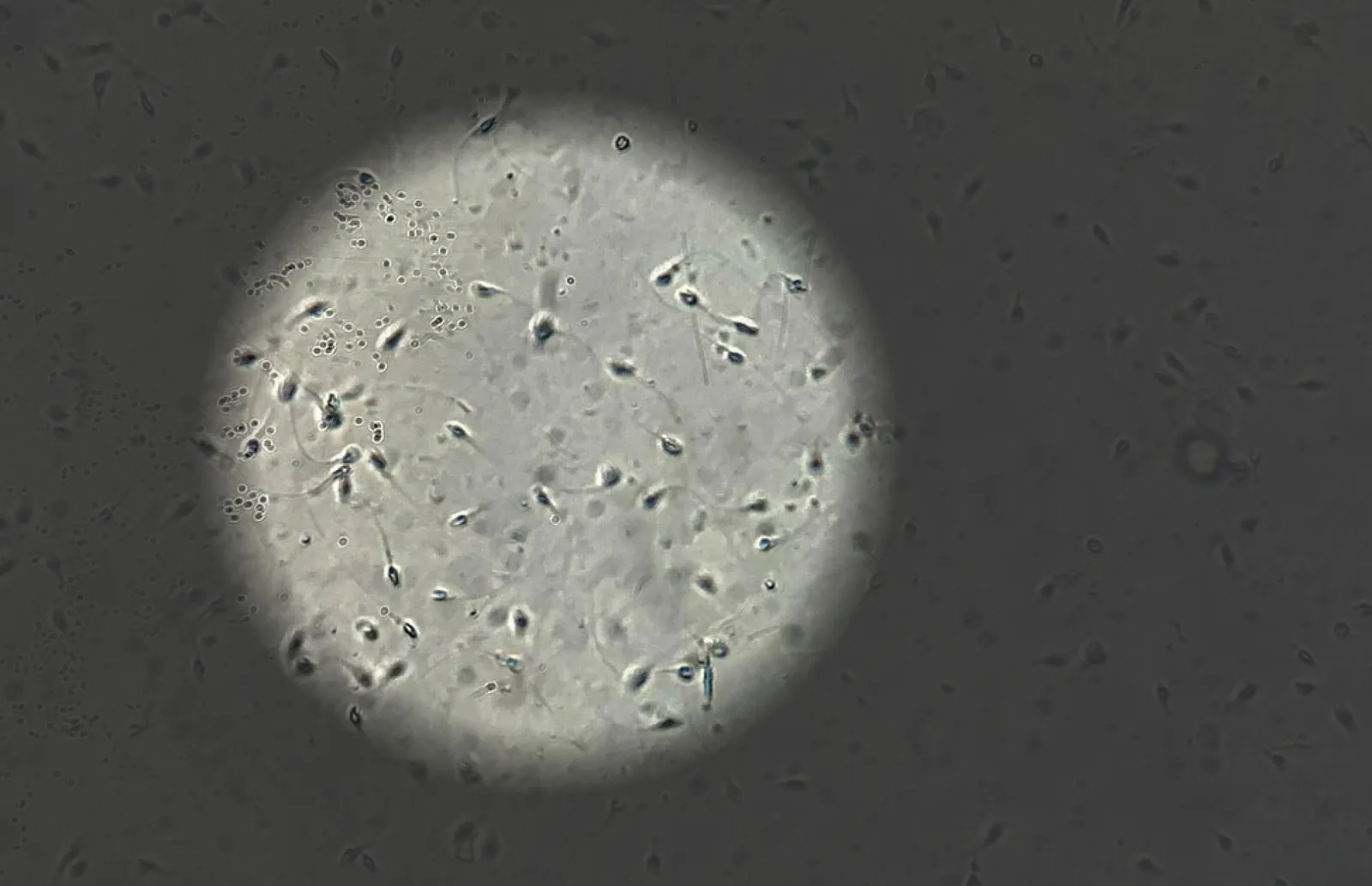
Now you look. The goal is a fair estimate of motility, not a rushed glance at an over-crowded field.
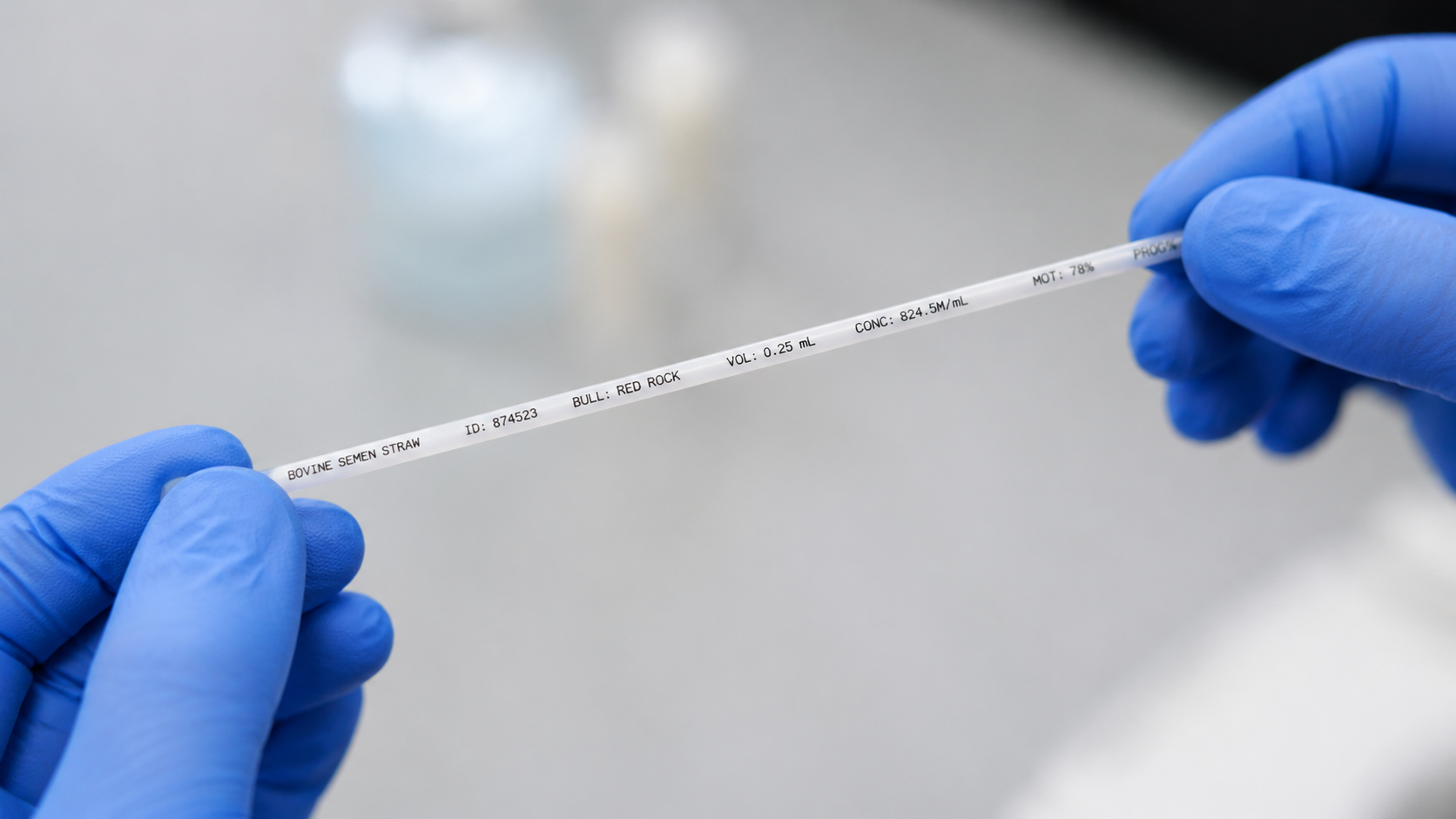
- Thaw one straw at 37 degrees for 30 seconds. Dry it completely before cutting.
- Place a small drop on a warmed slide. If the sample is dense, dilute it with warmed extender to roughly 25 to 30 million sperm per milliliter. Raw, undiluted semen packs too many sperm into the field and makes you overestimate motility.
- Let it settle about 10 minutes at 37 degrees if diluted, then add a warmed coverslip.
- Read at 200x to 400x. Find several groups of about 10 sperm and estimate how many are moving progressively forward versus how many are not.
- Judge two things. Total motility, meaning any movement, and progressive motility, meaning forward straight-line movement. Progressive is the number that counts.
- Compare against the threshold. Above 30 percent progressive is the accepted minimum for an acceptable dose. Well-handled frozen-thawed doses often sit higher.
The honest problem with this stage is that it is subjective. Two technicians reading the same drop can disagree by a wide margin, and a tired technician at the end of a long day in the corral reads differently than a fresh one in the morning. That is exactly the weakness the next stage fixes.
Stage 3: MAKSA evaluation
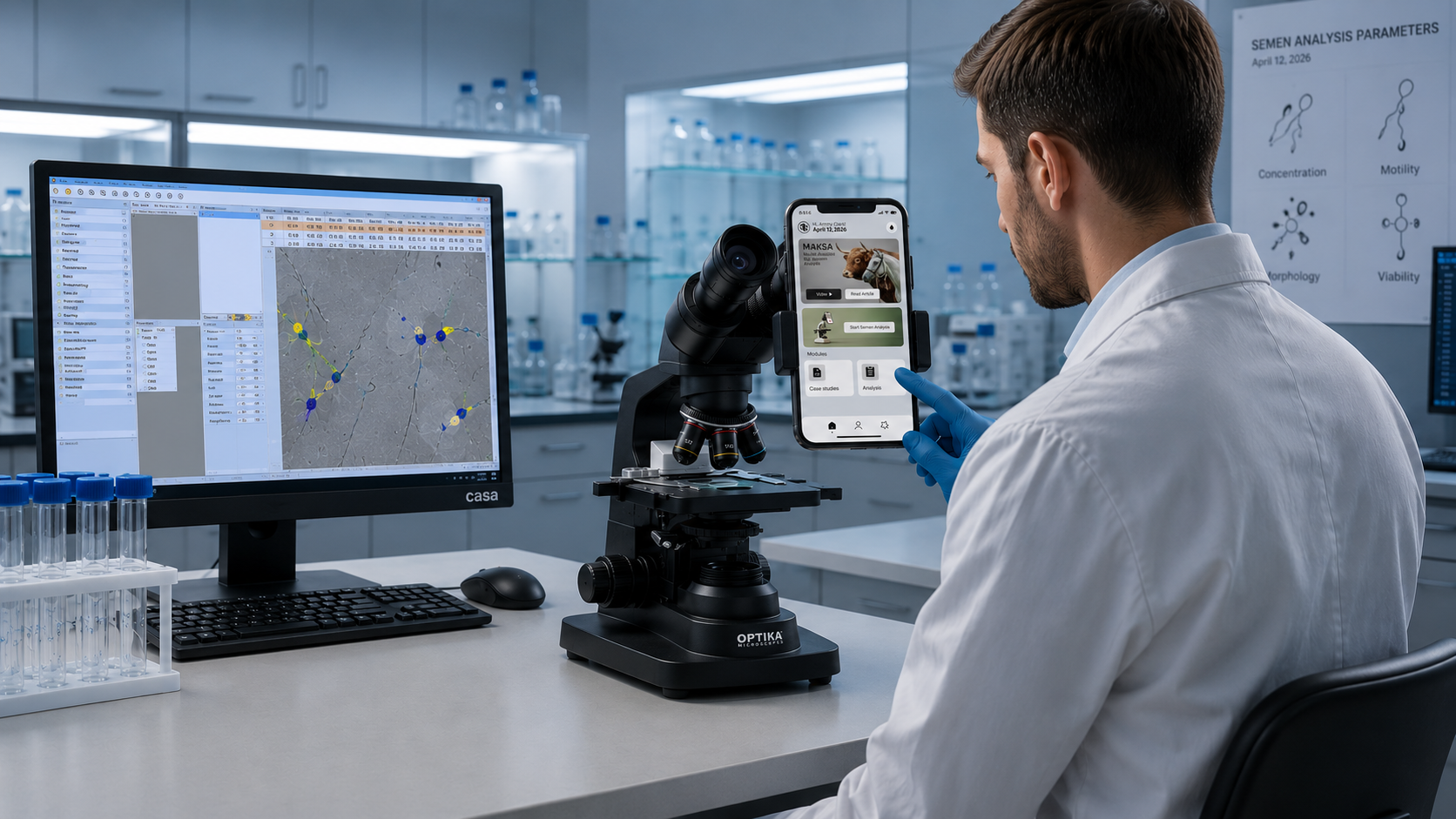
This is where you turn the visual guess into an objective number. MAKSA reads motility and progressive motility from the same microscope and a smartphone, and gives you a measured value instead of an eyeball estimate.
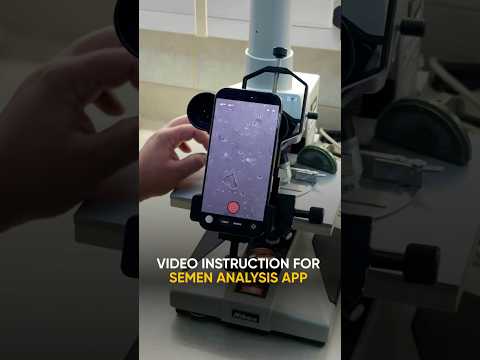
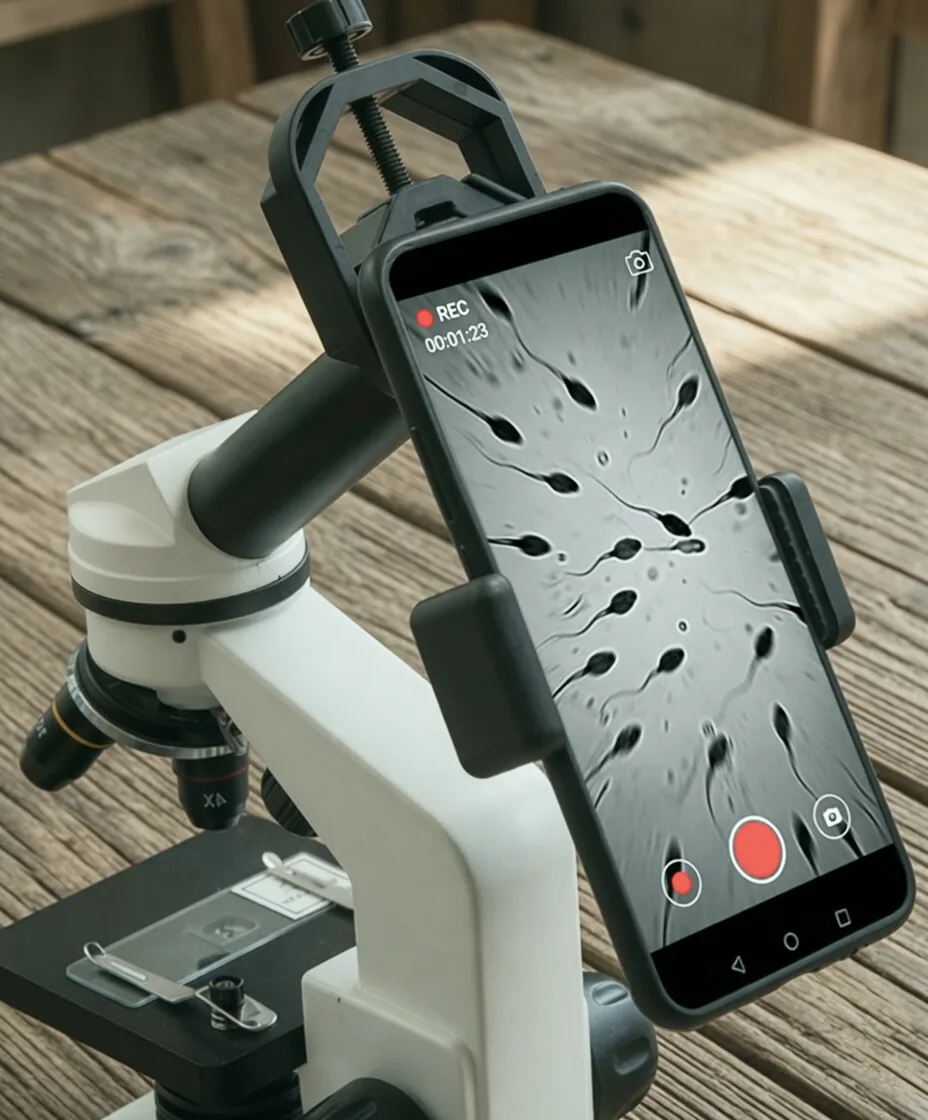
- Mount the phone on the eyepiece. A simple phone mount holds the camera steady against the eyepiece and gives better results than holding it by hand. Steadier footage means cleaner tracking.
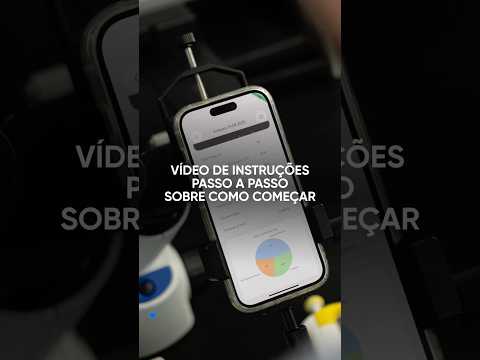
- Open MAKSA and follow the on-screen capture. It records the field through the phone camera.
- The app returns motility and progressive motility. Compare the progressive number against your 30 percent threshold.
- Log the result against the bull, the batch, the date, and the conditions, so a bad reading later points you to the cause.
A few honest notes. MAKSA is a veterinary tool, for animal reproduction, not for human use. It reads motility and progressive motility, validated at r greater than 0.90 against laboratory CASA equipment across five species: bovine, equine, ovine, caprine, and camel. Concentration measurement is still in development, so it is not presented as a finished feature. It costs about a dollar per test. It will not replace a certification lab, and it does not try to. What it does is give the field technician a number where there used to be only a guess.
Reading the result: what the number tells you
A number is only useful if you know what to do with it.
Above the 30 percent progressive threshold, and consistent with the certificate, means the dose survived handling and is worth using. Below threshold on a dose that certified well tells you something happened between the central and your tank. That is a handling problem, not a bull problem, and the two are fixed in completely different ways.
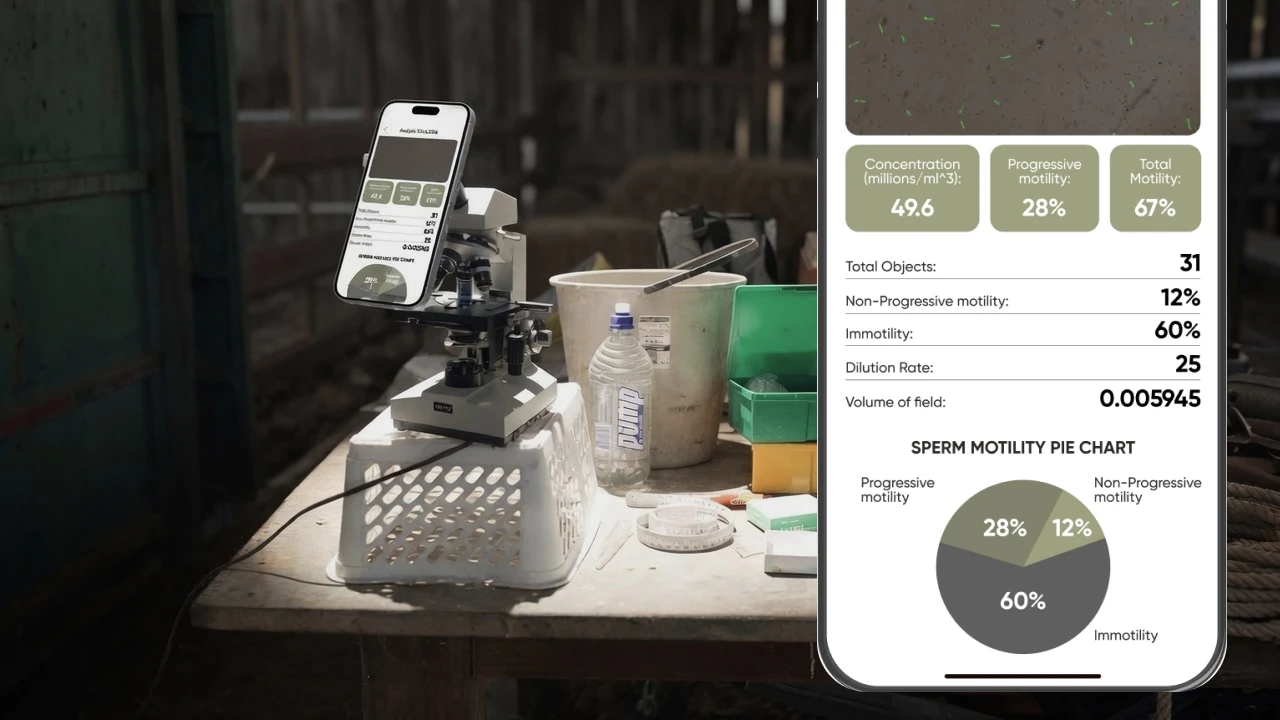
This is the distinction that saves a season. Bull 47 gives a low result. Without a field number, you blame bull 47 and switch bulls, and the drop repeats because the real cause was a warm botijao or a bad thaw. With a field number, you catch the handling failure and fix it directly.
The pattern behind the protocol
Every stage of this protocol exists to remove a place where quality can hide. Temperature control kills cold shock. Proper dilution stops you overestimating. An objective reading takes technician bias out of the number, and good logging means you are not guessing next season.
Field evaluation is not about second-guessing the central. It is about protecting the dose across the one stretch nobody else measures, the stretch between the tank and the cow.
Frequently asked questions
How do you check bull semen quality in the field? Thaw one straw correctly at 37 degrees for 30 seconds, place a drop on a warmed slide, and read motility under a microscope with a 37 degree stage at 200x to 400x. Estimate progressive motility, the share of sperm moving forward in a straight line, and compare it against the 30 percent minimum threshold. A field tool like MAKSA turns that visual estimate into an objective number.
What is the minimum motility for bovine semen used in AI? The accepted field threshold for an acceptable breeder is above 30 percent individual progressive motility, the standard used by the Society for Theriogenology. Some organizations use higher cutoffs. Well-handled frozen-thawed doses often read higher than the minimum, so a low reading on a certified dose usually points to a handling problem.
Why does semen quality need to be checked on the farm if the central already tested it? Because the certificate describes the dose at freezing, not today. Between the central and the cow, quality can only fall. Transport, warm storage, a bad thaw, and long delays before deposit all cost motility, and none of them are visible without measuring. Checking on the farm catches the loss the certificate cannot see.
How long after thawing can I use a semen dose? Use it within about 30 minutes of thawing. Progressive motility falls with time, dropping from roughly 43 percent at 30 minutes to around 32 percent at 2 hours in one CASA study. Thaw only what you will use quickly, and never leave thawed straws sitting.
Can a smartphone really measure semen motility accurately? For motility and progressive motility, yes. MAKSA reads both from a microscope and a smartphone and is validated at r greater than 0.90 against laboratory CASA equipment. A phone mount at the eyepiece improves results. Concentration is still in development, so it is not presented as a finished feature, and the tool does not replace a certification lab. For a field motility check, it gives a number instead of a guess.
What equipment do I need for field semen evaluation? A microscope with a warming stage set to 37 degrees, ideally phase contrast, with 10x and 40x objectives. A thaw water bath and thermometer. Warmed slides, coverslips, and pipettes, all held at 37 to 39 degrees. Warmed extender for dilution. A smartphone with a mount if you are using MAKSA for an objective reading.
Get the field checklist
This protocol works best on paper, at the chute, not on a screen you have to scroll. We made a one-page version built to be laminated and kept in the field kit. Pre-check, visual assessment, and MAKSA steps, on a single page you can wipe clean and reuse.
Download the field checklist, the protocol behind 1,000+ field tests across 10+ countries, at avateit.com. Free, built for field technicians and autonomo vets, and made to live in your bag, not your inbox.