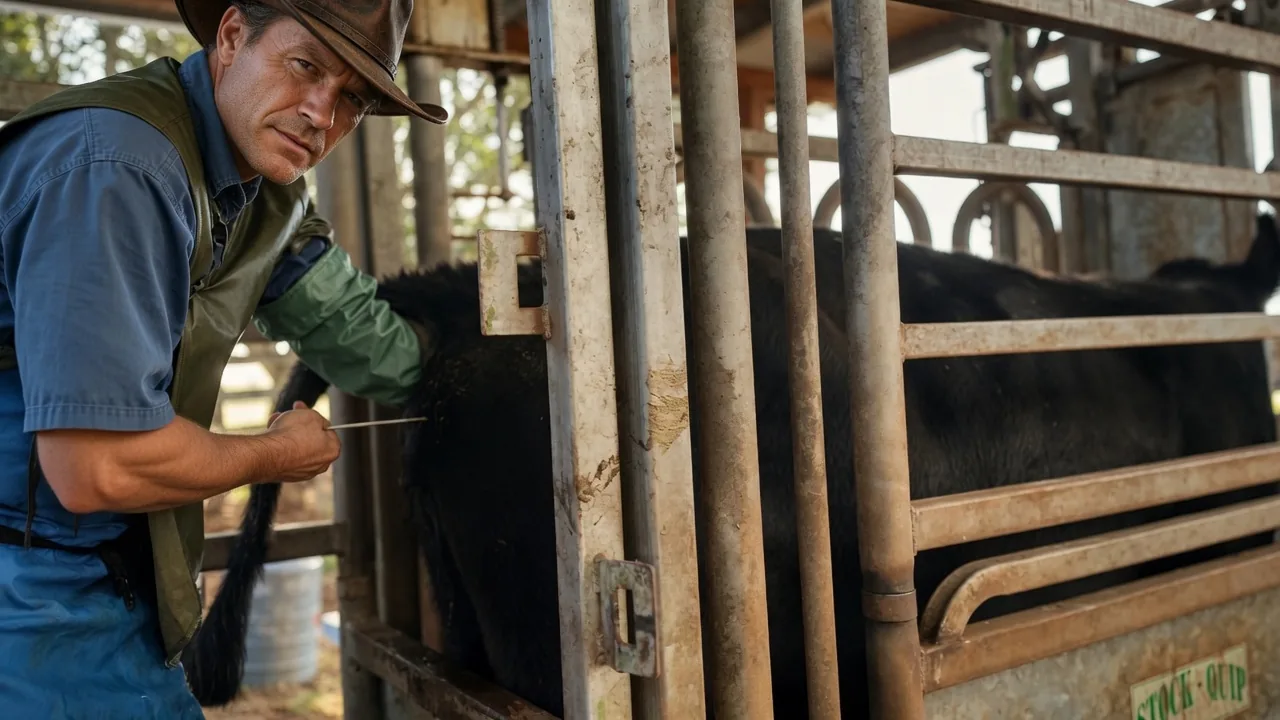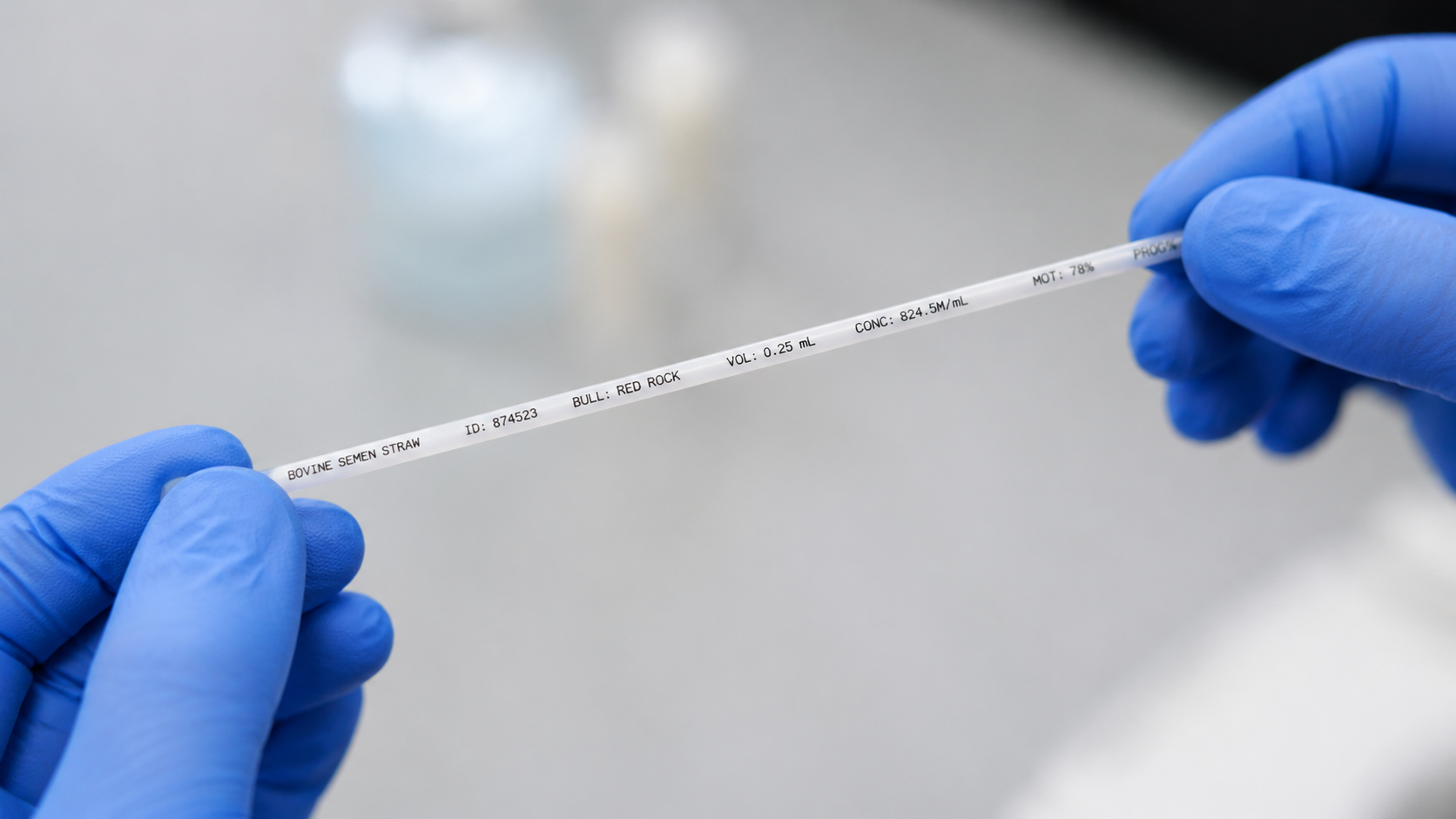
If you run a bull stud, an AI center, or a field breeding program, you already know semen quality drives everything downstream. What most ROI conversations miss is where the error actually happens. It rarely happens in the lab. It happens in the field, after the straw leaves the CASA system, where nobody is measuring anything at all.
This is a guide to costing that gap. We compare manual field evaluation, a lab CASA system like the Hamilton Thorne IVOS II, and a smartphone-based field option. Then we give you a simple ROI framework you can run on your own numbers.
Three ways to measure semen quality
Most operations use one of three methods, and many use all three at different points.
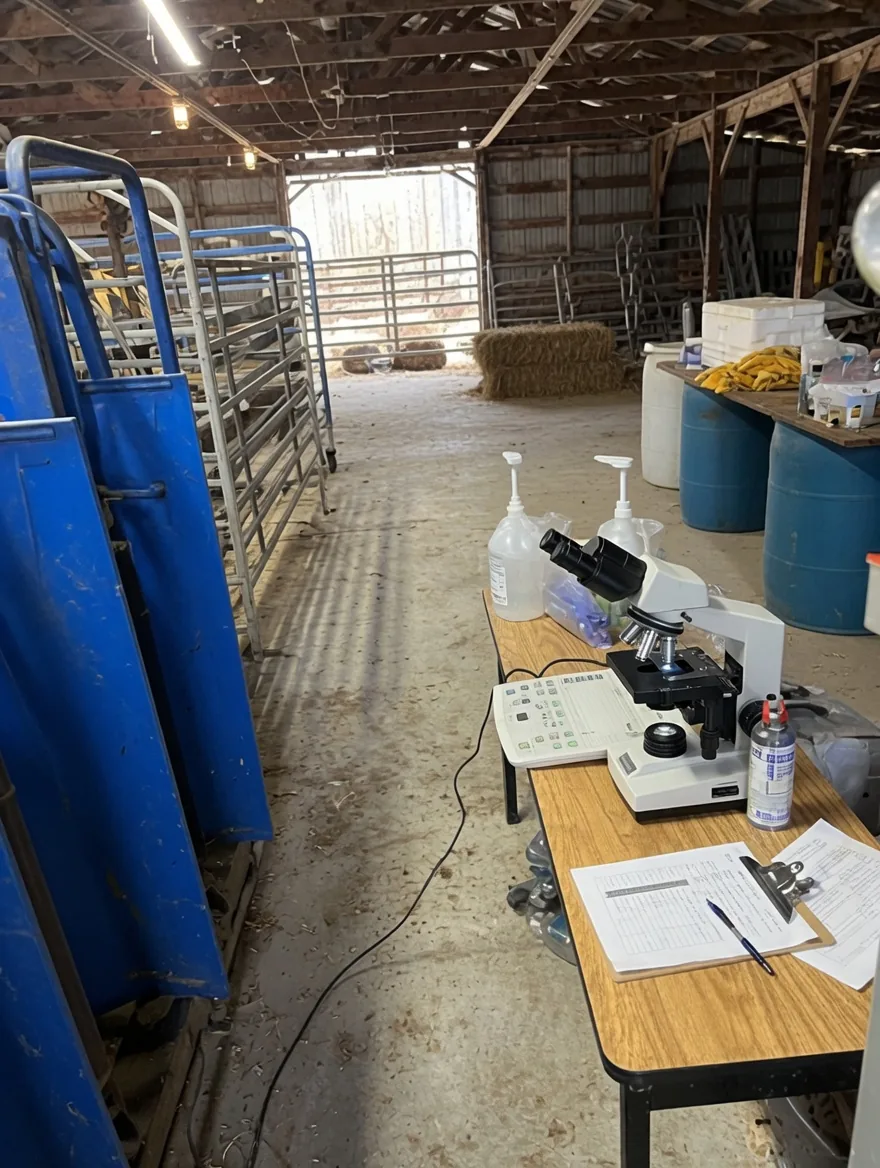
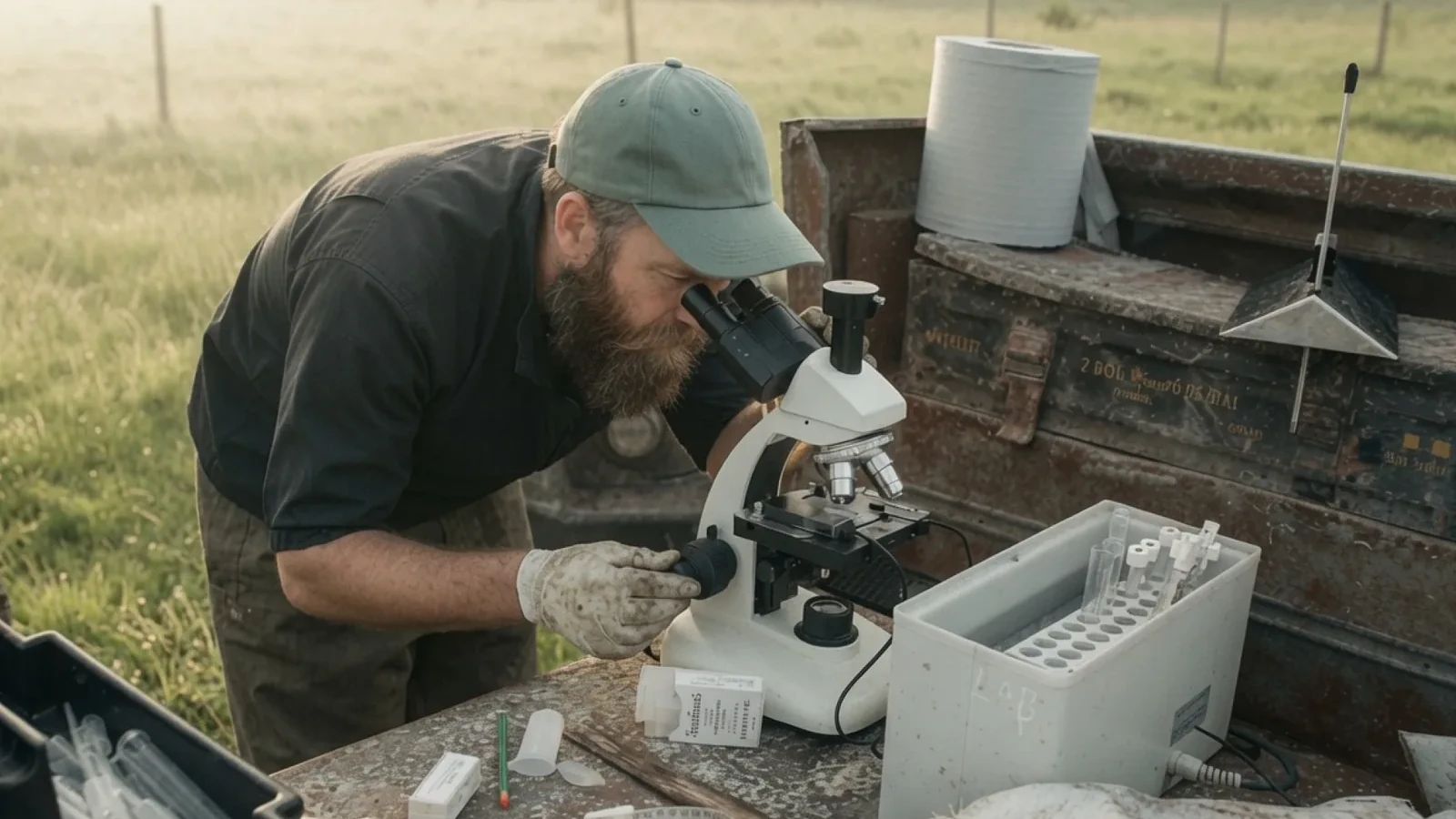
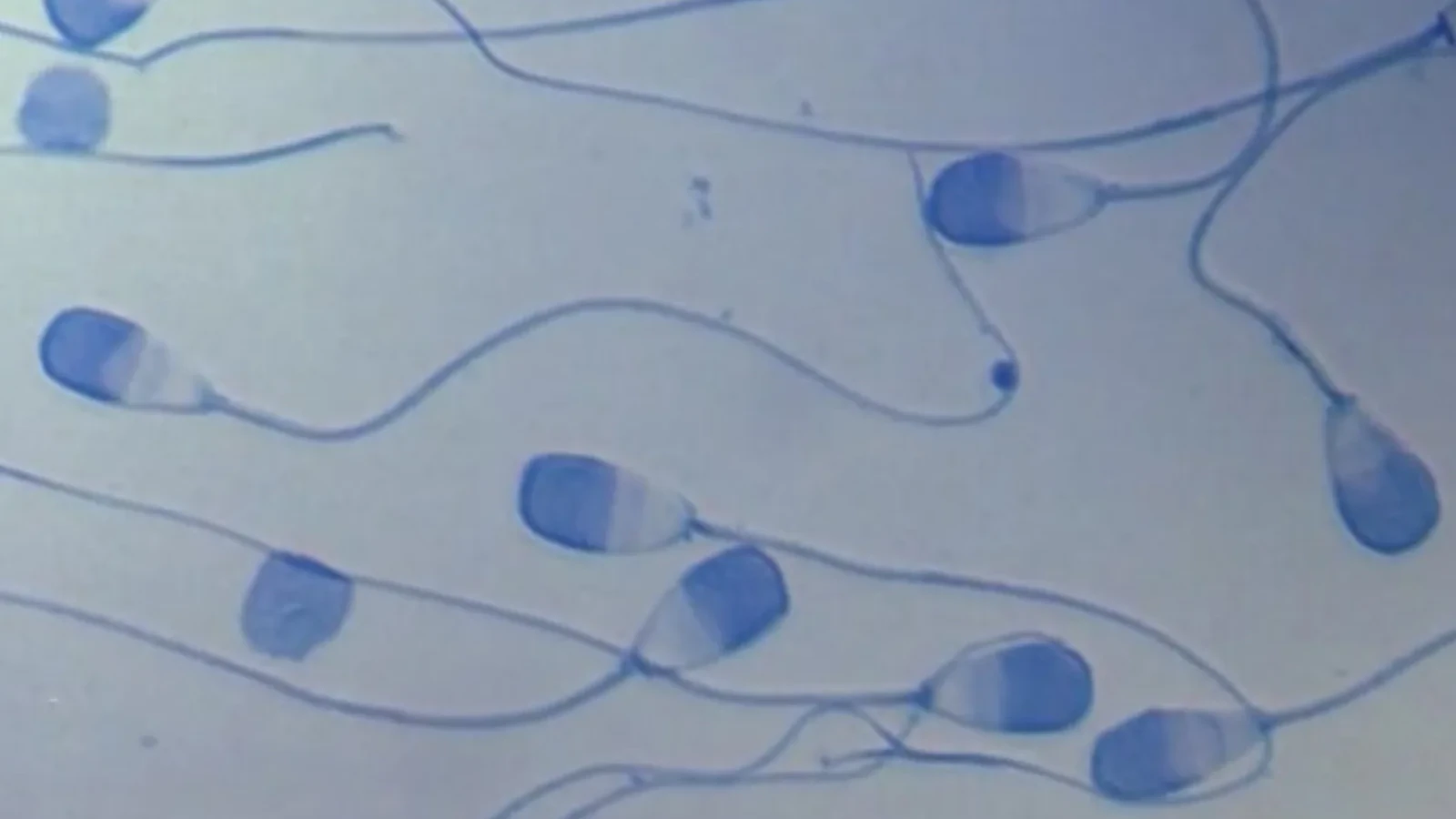
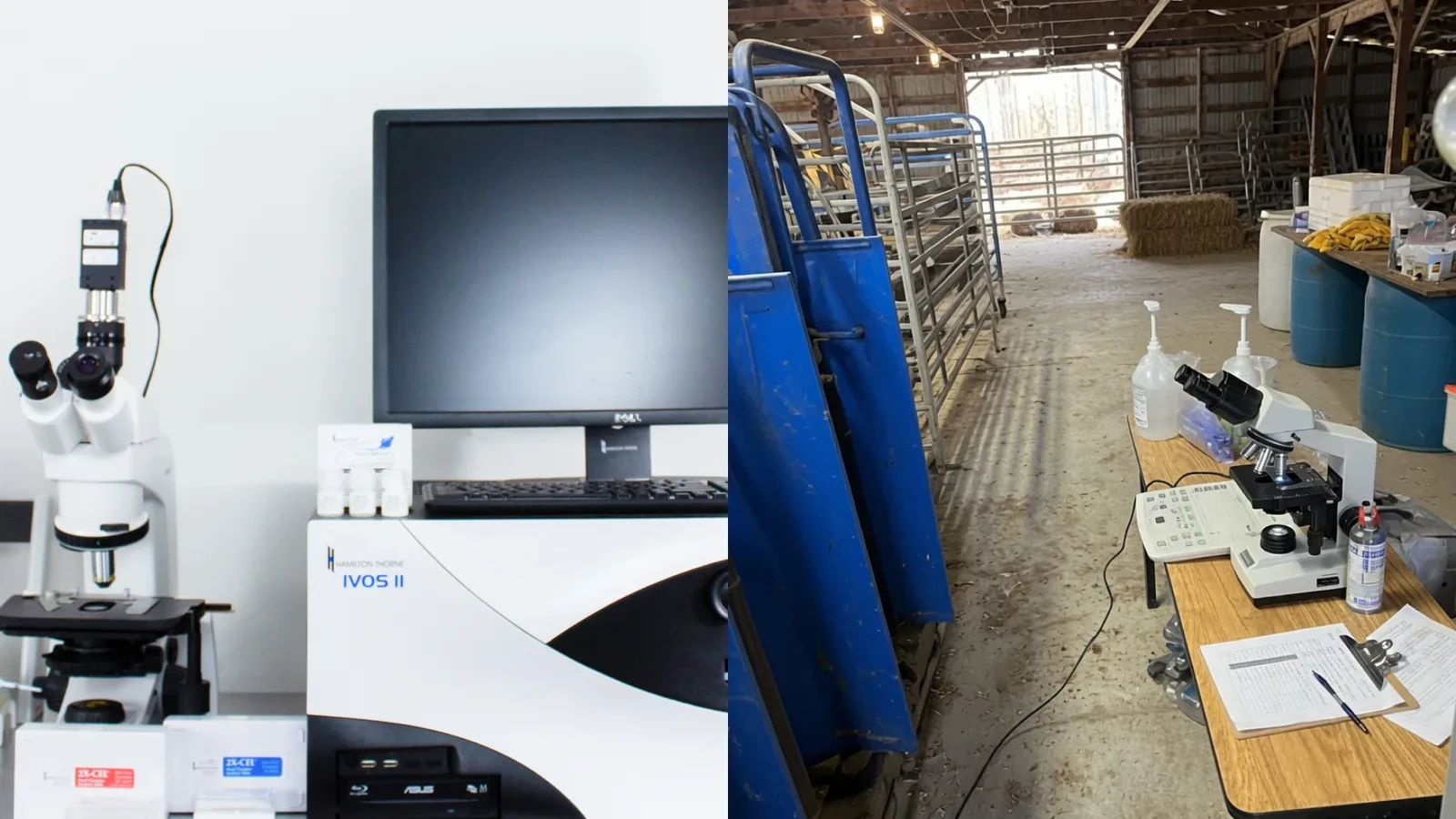
Manual field evaluation is a technician looking at a sample under a microscope on a heated stage. They estimate total and progressive motility by eye. They count concentration with a chamber. They score morphology by hand. It needs almost no equipment and it works anywhere. The problem is consistency. Published work documents intra-sample motility swings of 30 to 60 percent, plus large differences between one observer and the next. Temperature drift, tired eyes, and field conditions make it worse.
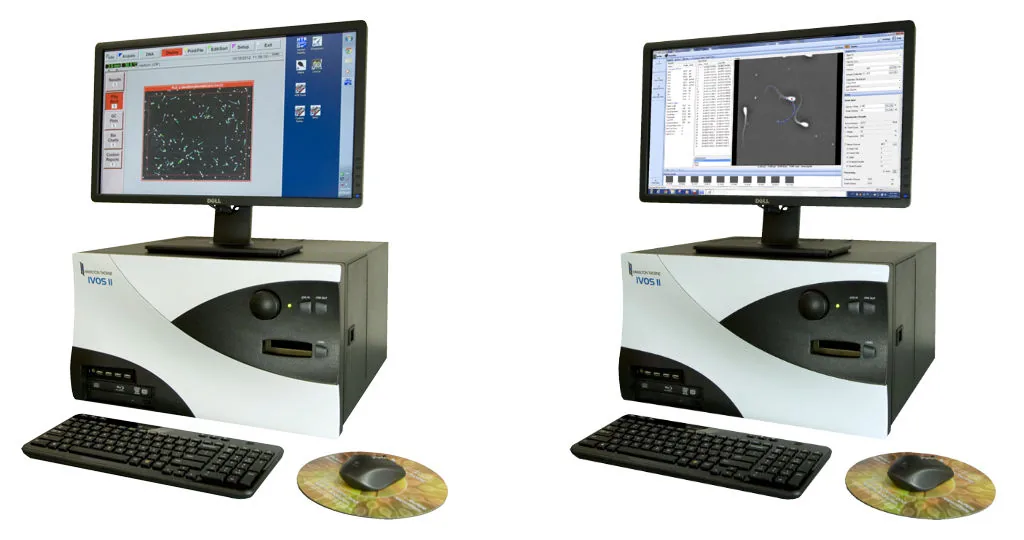
A lab CASA system like the Hamilton Thorne IVOS II fixes the consistency problem inside the lab. It is a benchtop unit with optics, a heated stage, a camera, and analysis software in one box. It tracks motility objectively, reads full kinematics, measures concentration, and scores morphology with species-specific modules. It produces reports, archives video, and holds temperature within half a degree. For a central lab certifying doses for sale or export, it is the standard for good reason.
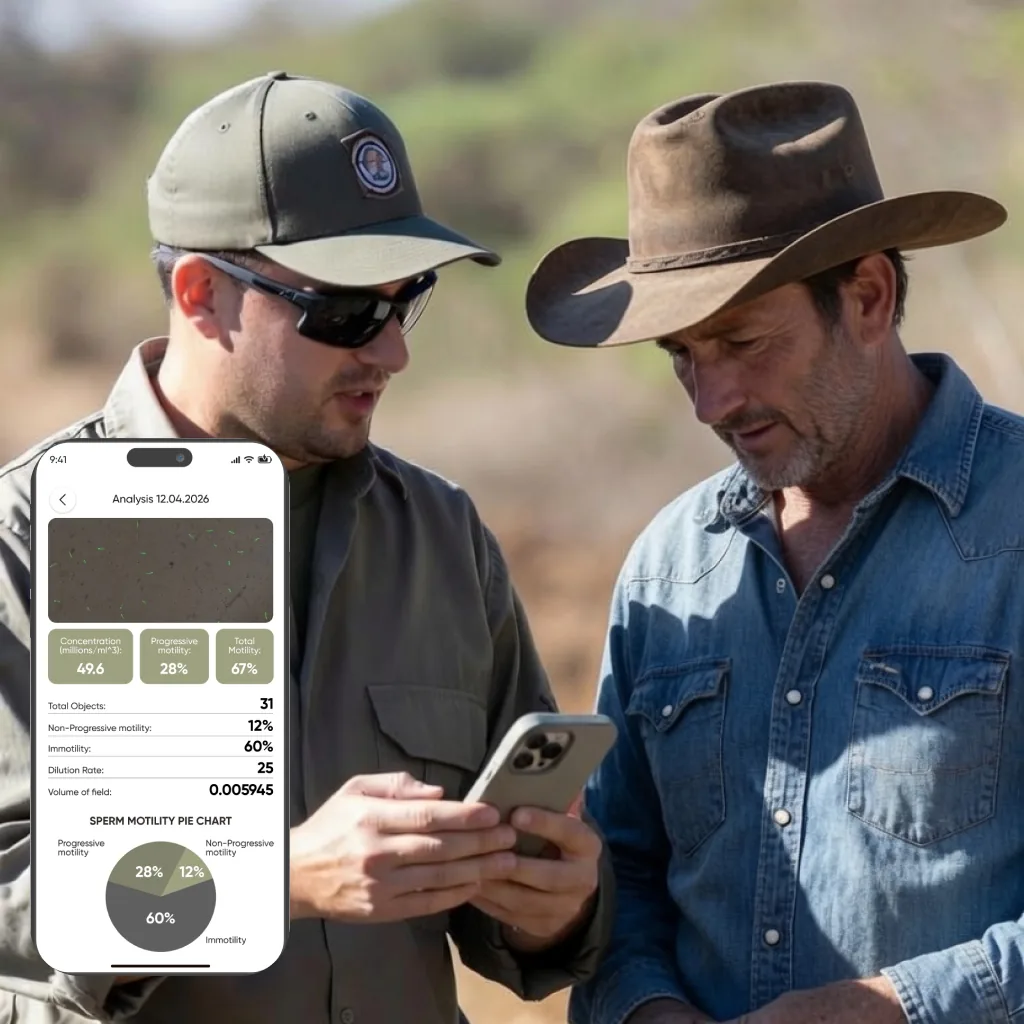
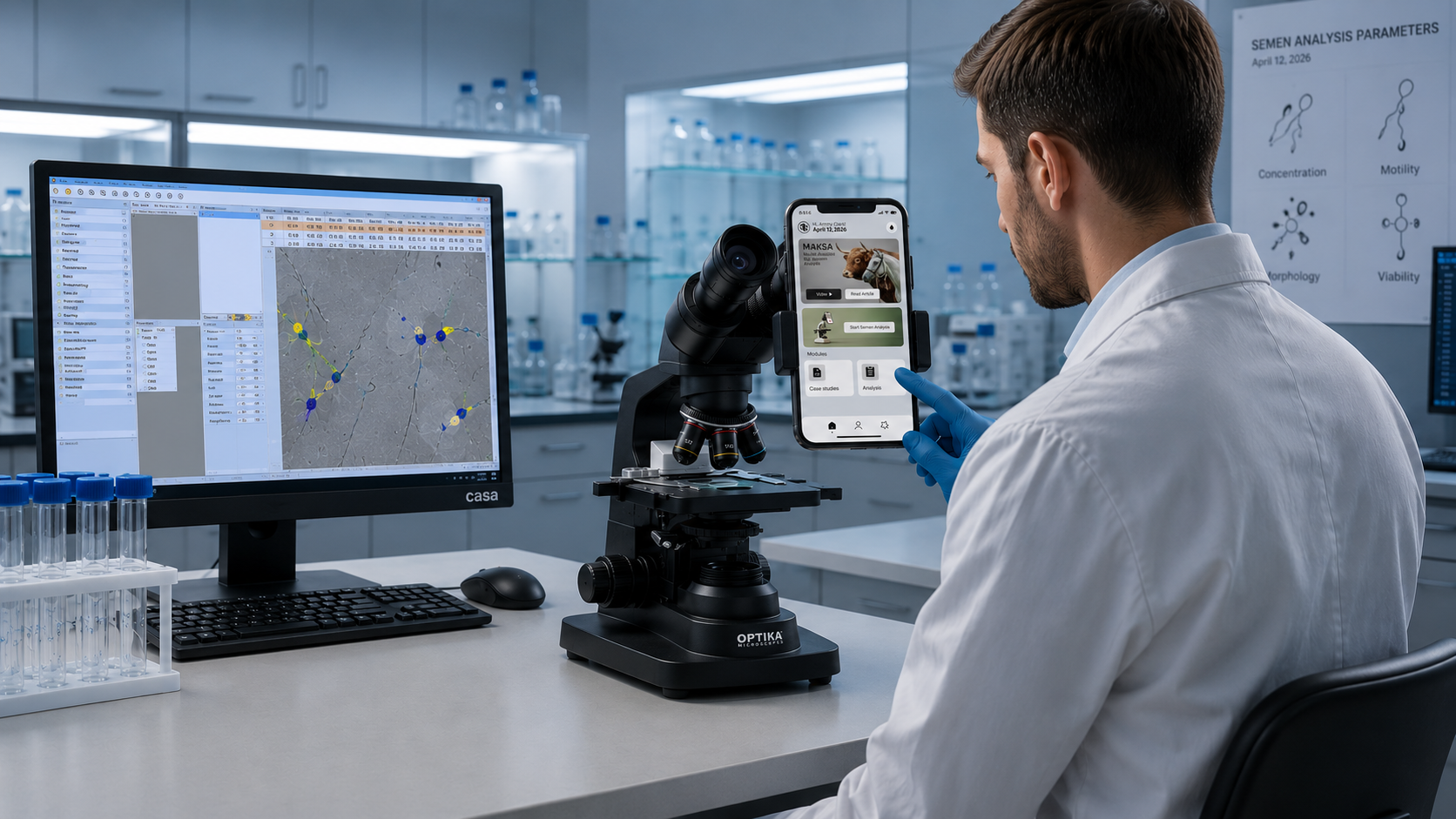
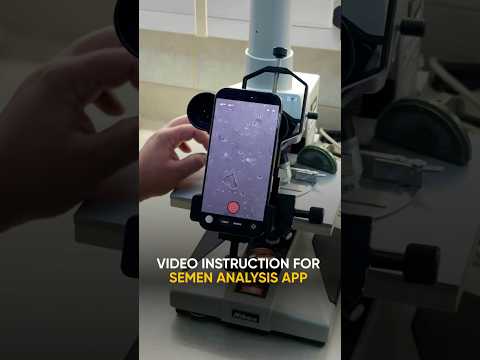
The third method barely existed until recently: objective measurement in the field, using a microscope and a smartphone. That is where MAKSA sits. The setup is simple: a standard field microscope with a phone camera reading the sample. It is not trying to be a lab. It brings a motility number to the exact place where the manual guess used to be the only option.
A phone mount that holds the camera steady against the eyepiece improves results. A steadier feed means cleaner footage for the app to track, so a basic adapter is worth the small extra cost over holding the phone by hand.
##
Where the money actually leaks
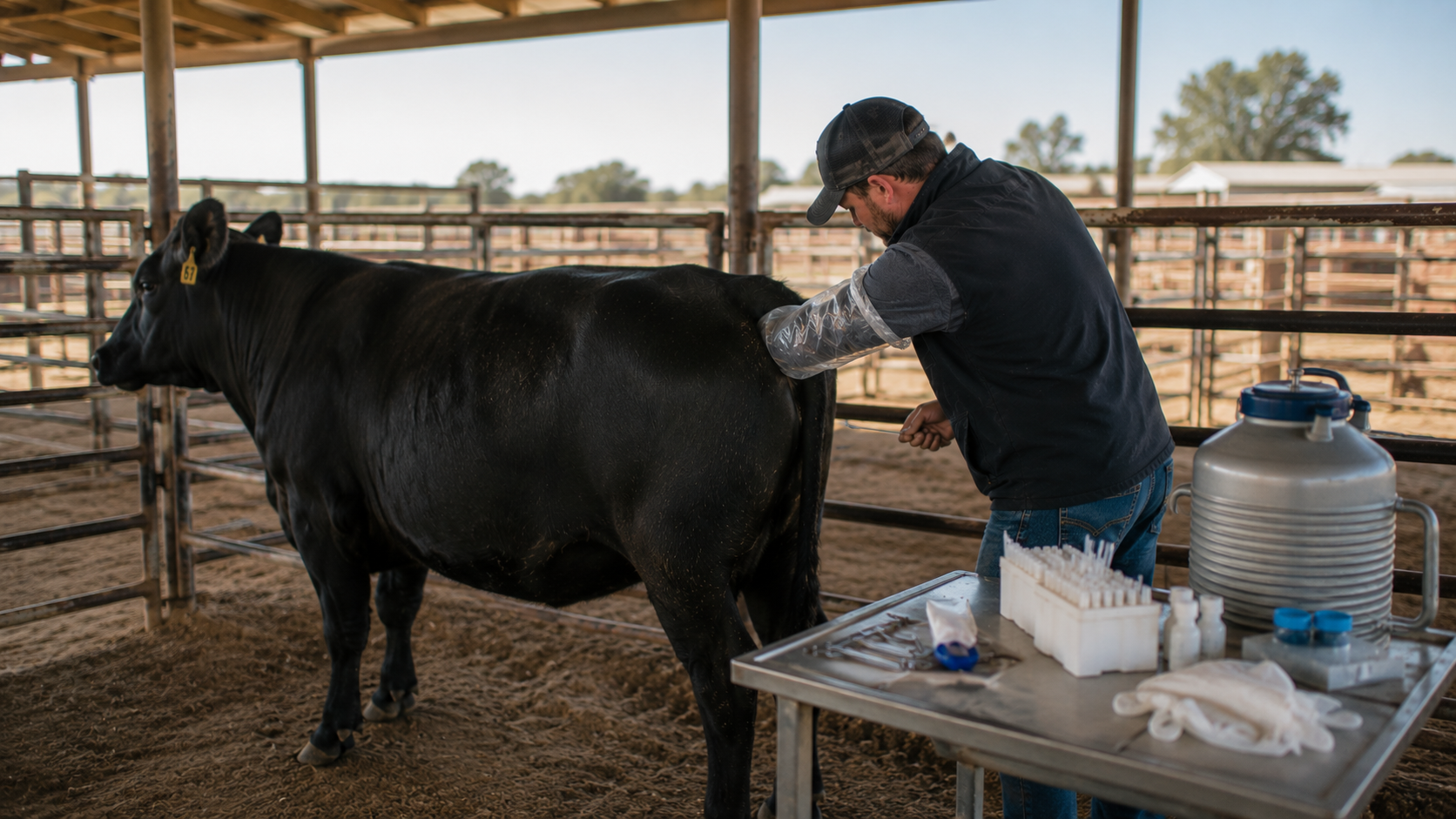
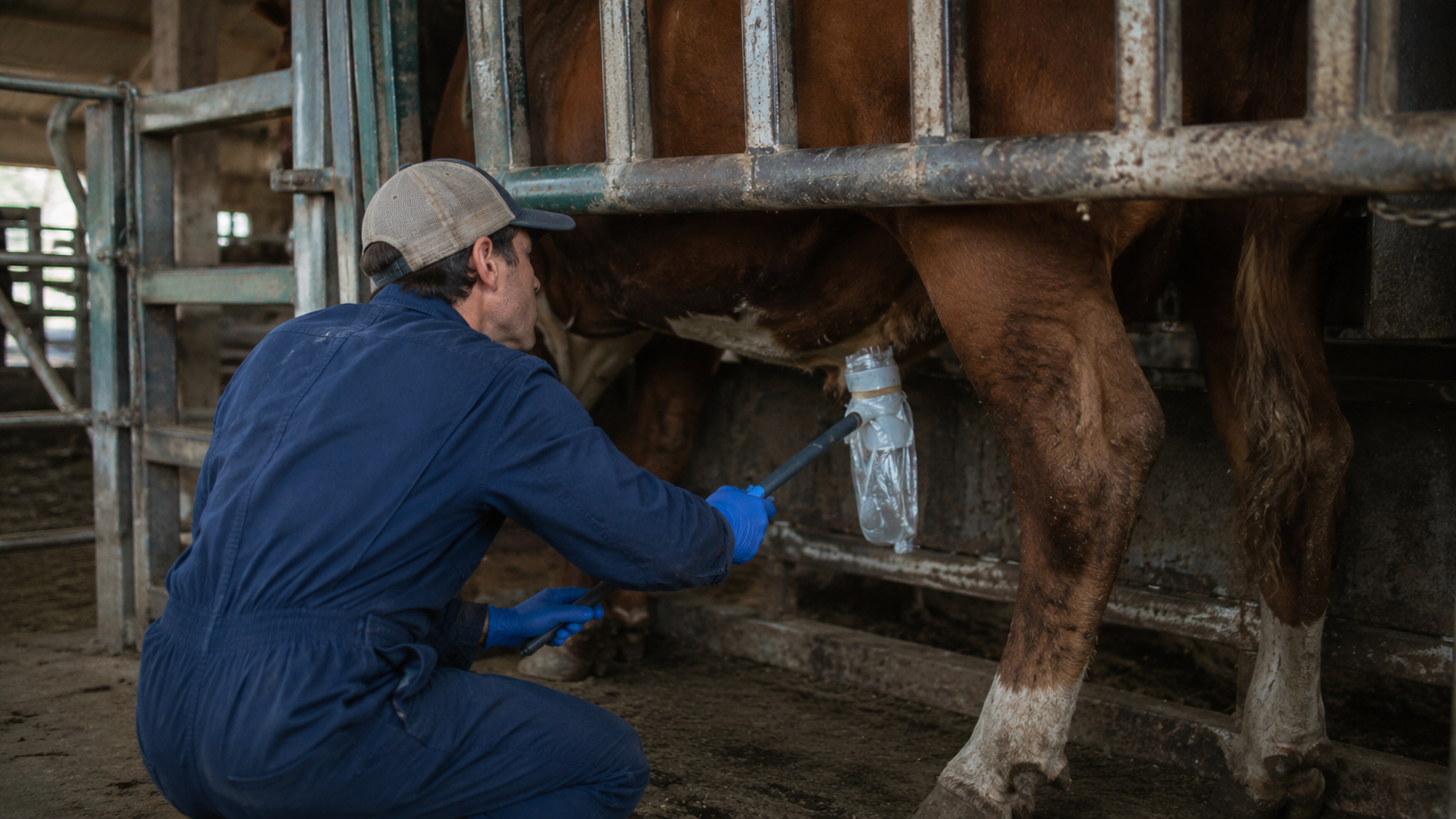
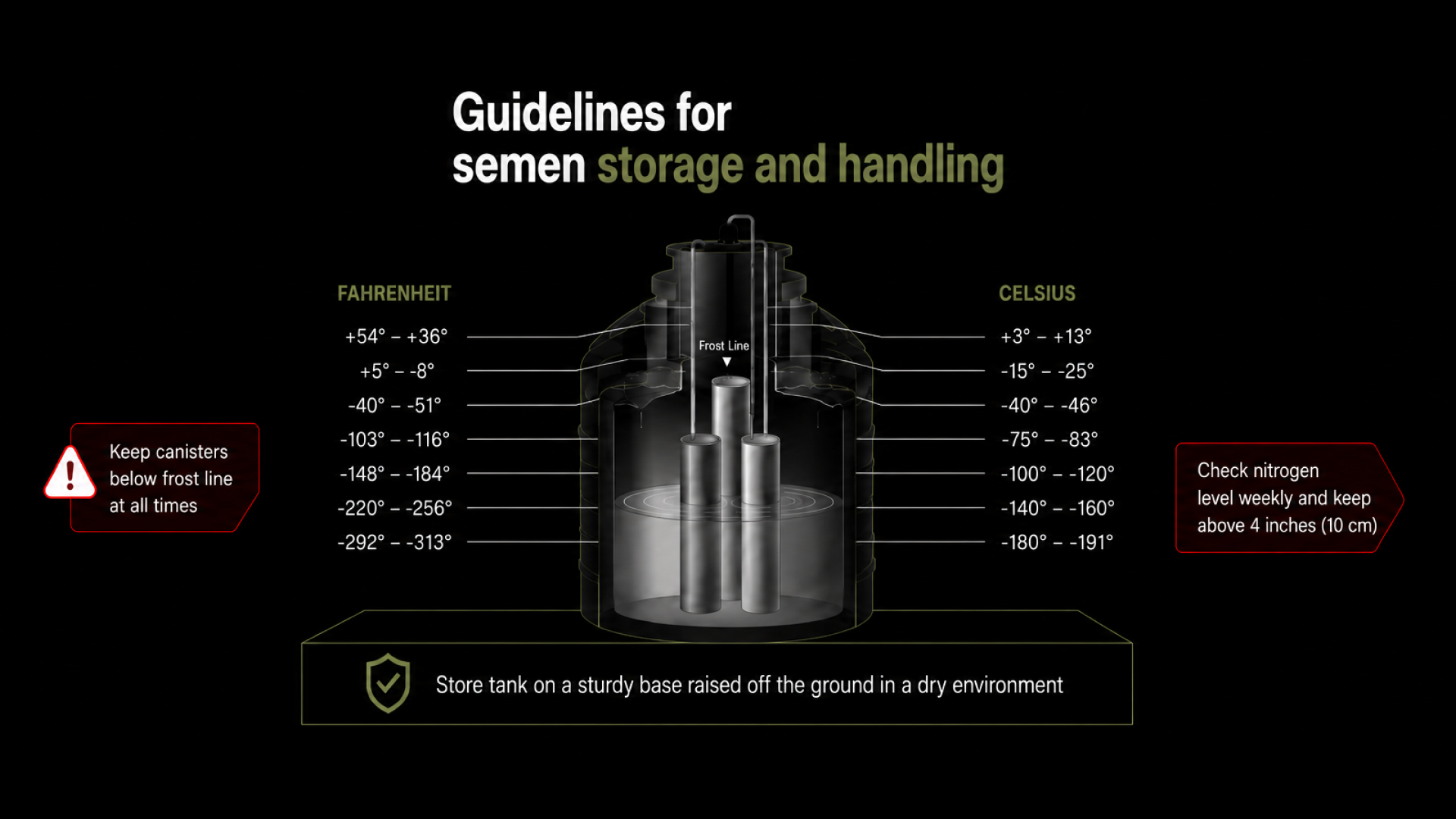
Here is the part most ROI models get backwards. A lab CASA system protects the dose at the moment of freezing and certification. That matters. But a huge share of real-world loss happens after that, in handling, transport, thawing, and on-farm insemination, where no CASA machine will ever go.
Think in terms of the animal, not the batch. Bull 47 throws a low conception season. Was it the bull, the batch, the tank that warmed up in transit, or the thaw protocol at the pen? Without a number at the point of use, you are guessing. Every guess that goes the wrong way costs a re-service, an extended calving interval, and lost production.
That is the leak a lab system cannot reach and a manual field guess cannot measure. It is also the cheapest leak to close.
Comparison: field, lab CASA, and smartphone
| Factor | Manual field evaluation | Hamilton Thorne IVOS II (lab CASA) | MAKSA by Avare BioTech (field) |
|---|---|---|---|
| Objectivity | Subjective, 30-60% variability reported | Objective tracking, removes observer bias | Objective motility, validated at r greater than 0.90 vs. CASA |
| Where it works | Anywhere | Central lab only | Anywhere, on a smartphone |
| Parameters | Motility %, concentration, rough morphology | 20+ including full kinematics and morphometry | Motility and progressive motility (concentration in development) |
| Equipment cost | Microscope plus heated stage | Benchtop CASA system (major capital) | Microscope you already have plus smartphone, about $1 per test |
| Training | Skilled technician required | Trained lab operator required | No training, app-based |
| Speed | 10-30 min per sample | 1-5 min automated plus review | Minutes, in the field |
| Data record | Paper notes, basic photos | Full digital archive and reports | Digital record on the phone |
| Best use case | Rapid on-farm screening | Certification, export, research, central QC | Field verification at the point of use |
The honest read: MAKSA does not replace the IVOS II. If you certify doses for sale, you still want lab CASA. MAKSA replaces the guess in the field, which today is your only other option once the straw is on the farm.
The ROI framework: cost of getting it wrong
Semen assessment errors carry a direct price. Overestimate motility or miss a handling failure, and you breed with a compromised dose. That means lower conception, repeat inseminations, and lost revenue. Here is a framework for your own operation.
Step one, baseline volume. Count how many samples or batches you evaluate per season.
Step two, error rate. Estimate the share of decisions made on subjective field calls with no objective backup. In most field programs this is close to 100 percent, because no measurement happens after the lab.
Step three, value per avoided error. One misclassified ejaculate spread across 200 to 500 doses touches dozens of pregnancies. Average re-service cost per cow runs $50 to $200 or more, once you add semen, labor, and lost production days. For a stud, consistent field data supports premium pricing and protects reputation when a client questions a batch.
Step four, compare the cost of measuring against the cost of not measuring. A field test that costs about a dollar sits against a rejected or misused batch worth well over a thousand. You do not need many corrected decisions per season for the math to land.
Worked example, adjust to your own figures. An operation runs 2,000 field evaluations a season. Today every one is a subjective call. Even a modest 8 percent effective error rate on those calls, at a conservative $120 per re-service across the pregnancies affected, is real money left on the table. Closing part of that gap with a dollar-a-test field check pays for itself many times over in a single season.
Want your own numbers instead of an illustrative example? The free ROI calculator at avateit.com runs this same math on your herd size, semen price, and conception rate.
For a lab, the IVOS II ROI story is about throughput and certification. For the field, the MAKSA ROI story is simpler: it turns your most frequent decision, made most often with no data, into a measured one.
Where MAKSA stands today
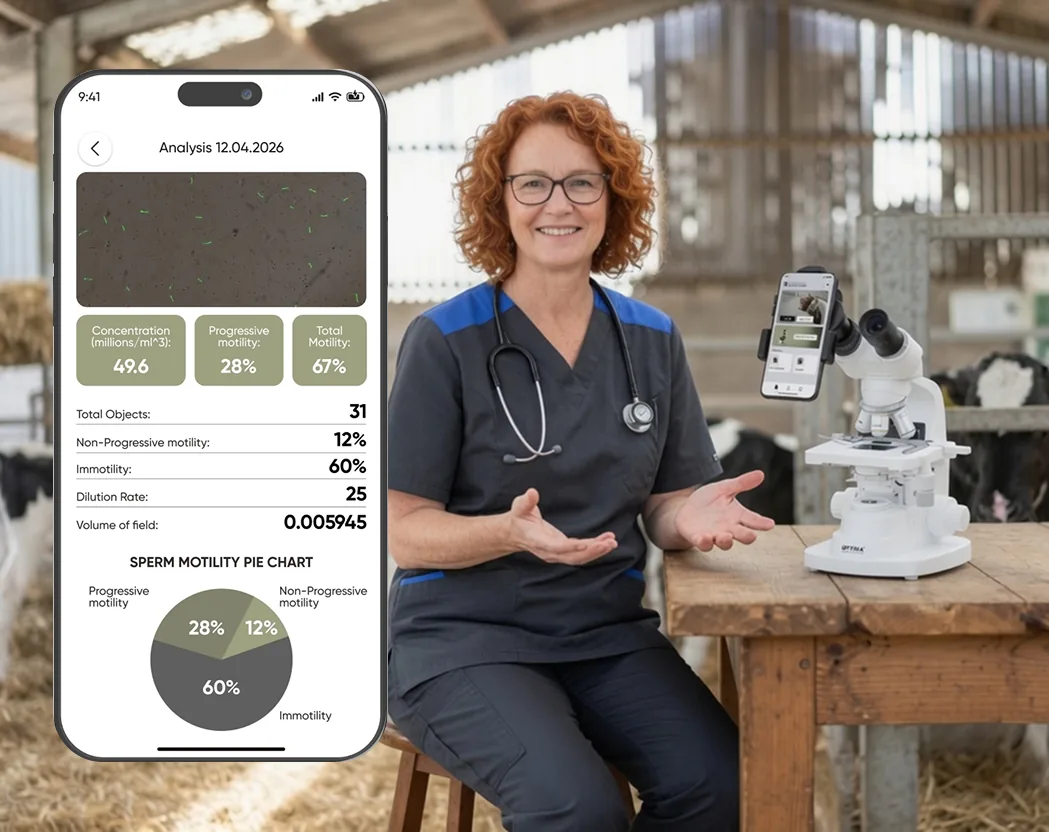
Straight facts, no inflation. MAKSA is a veterinary tool, built for animal reproduction, not for human use. It is early. We have run over 1,000 field tests across 10-plus countries, and the app updates roughly once a month based on what technicians report back.
It is validated at r greater than 0.90 against laboratory CASA for motility and progressive motility, across five species: bovine, equine, ovine, caprine, and camel. Concentration measurement works but is not yet accurate enough to trust as a finished feature, so we do not present it as one. It is in active development. The work is backed by the Al-Maktoum Family Office.
MAKSA runs on a microscope you already have plus a smartphone. A simple phone mount at the eyepiece gives steadier footage and better tracking results than holding the phone by hand.
That is the whole picture. A young tool doing one job well, in the one place the expensive systems can't reach.
Run the numbers on your own operation
If you certify doses, keep your lab CASA. Then add a field check where you currently add nothing. The question is what that gap is worth on your farm, with your herd size, your semen price, and your conception rate.
We built a calculator that does the math for you. Put in your herd size, what you pay per dose, and your current conception rate. It shows you the loss from a small drop in conception, and the breakeven against a dollar-a-test field check with MAKSA.
Calculate how much a 3% drop in conception rate costs your operation. Download the free ROI calculator below
[pdf]